300,000 hectares and counting: How South Africa’s forestry sector is quietly preserving biodiversity
MAY 20, 2026 – Increasing land pressure, ecosystem degradation, habitat fragmentation and now a changing climate, mean all landowners now have a role to play in safeguarding biodiversity and ecological resilience says Forestry South Africa (FSA).
“Biodiversity stewardship must extend beyond the boundaries of protected areas,” says Dr Ronald Heath, FSA’s Director of Research and Protection. “Conservation has to happen across entire landscapes, where productive land uses and natural ecosystems coexist and support one another.”
As the world marks the International Day for Biological Diversity on 22 May, under the United Nations theme, “Acting locally for global impact”, FSA is highlighting how South Africa’s forestry sector is doing precisely this.
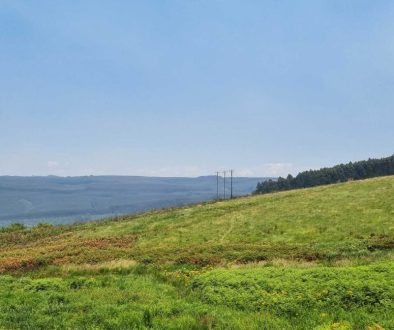
A recent survey revealed that the FSA members collectively preserve more than 300,000 hectares of natural ecosystems within forestry landholdings, over 20% of the total forestry area. This includes upwards of 170,000 hectares of grasslands and associated wetlands, 61,000 hectares of indigenous forests, 10,000 hectares of fynbos, alongside extensive riverine ecosystems.
These natural areas are actively managed, monitored and maintained as part of responsible land stewardship practices. Together, they form ecological corridors and interconnected habitat networks that support species movement, climate resilience and ecosystem functioning across broader landscapes.
Importantly, environmental stewardship across the vast majority of the forestry sector is independently verified through internationally recognised certification systems.
While forestry landscapes provide refuge for many endangered, endemic and rare species, biodiversity preservation extends far beyond protecting individual species alone.
True biodiversity stewardship focuses on preserving functioning ecosystems and the ecological processes that sustain life, notes Heath. Healthy wetlands, grasslands, forests and river systems provide essential ecosystem services including clean water, healthy soils, carbon storage, pollination, erosion control, climate resilience, as well as being home to a multitude of species.
One example can be found within the landholdings of MTO Forestry, where conservation efforts help protect the critically endangered Hewitt’s Ghost Frog, a species found in only a few locations globally. However, the conservation focus is not simply about saving a frog species in isolation. It is about protecting the wetland ecosystem on which the species, and many critical ecosystem services, depend.
At MTO’s Longmore plantation, approximately half the landholding remains unplanted natural habitat, with large portions designated as high conservation value areas. Revenue generated from the planted areas helps fund conservation management activities such as alien invasive plant removal, controlled ecological burning and ongoing environmental maintenance.
Similarly, NCT Forestry continues to preserve and manage natural conservation areas within its plantation landscapes, protecting rare endemic species and sensitive ecosystems as part of its environmental stewardship commitments.
The future of biodiversity conservation depends on landscape-scale stewardship and collaboration between landowners, industries, conservation organisations and communities. Sappi’s Rare, Threatened and Endangered Species Programme is a wonderful example of how partnerships between communities, industry, conservation organisations and other landowners are helping reverse the biodiversity crisis, bringing endangered species back from the brink.
Another example is the water steward partnership between WWF South Africa and Sappi that looks after the uMkhomazi catchment. This catchment forms part of a globally significant Maputaland-Pondoland-Albany biodiversity and wetland hotspot and home to endangered species and one of South Africa’s last large free-flowing rivers.
“South Africa needs connected landscapes where ecological corridors run through multiple land uses and landowners work together toward shared biodiversity goals,” Heath concludes. “The forestry sector has shown that productive landscapes can also sustain living ecosystems, and this model will become increasingly important in securing biodiversity and ecosystem services for future generations.”