Why paper books still matter this International Literacy Day
This International Literacy Day, 8 September, the case for the printed book is stronger than ever – from a leisure reader seeking escape to the child discovering that the joy of reading. Literacy is also a fundamental human right, and books lay an unequivocal foundation for better learning.
International Literacy Day, which turns 60 in this year, is a fitting moment to remember that literacy begins with something wonderfully simple: a person, a book and knowing how to read it.
“We cannot underestimate that paper books can determine how deeply we read, how much we remember, and how children learn to love reading,” says Samantha Choles, communications manager for the Paper and Allied Manufacturers of South Africa (PAMSA).
“This is not an argument against technology. Devices such as smartphones and tablets are convenient, portable and a powerful way to distribute free reading material where books are scarce.”
A paper book is an invitation unplug from the always-on world in which we live. According to a study by Mindlab International at the University of Sussex, reading can lower stress levels by some 68%, and a paper book, newspaper or magazine makes a more relaxing companion, unlike blue light from a screen which delays sleep and suppresses melatonin.
However reading the printed word goes beyond a paperback by one’s favourite author. It extends to how our children are absorbing what they are being taught and how they are learning.
Print makes for active learning
There is the danger of devices leading to a passive learning experience whereas books, pen and paper encourage the sensory integration of turning pages, writing by hand or doodling in margins. Part of the reason lies in how our brains map information. Turning physical pages creates a visual index or map in our minds, linking what we read to where it sat on the page.
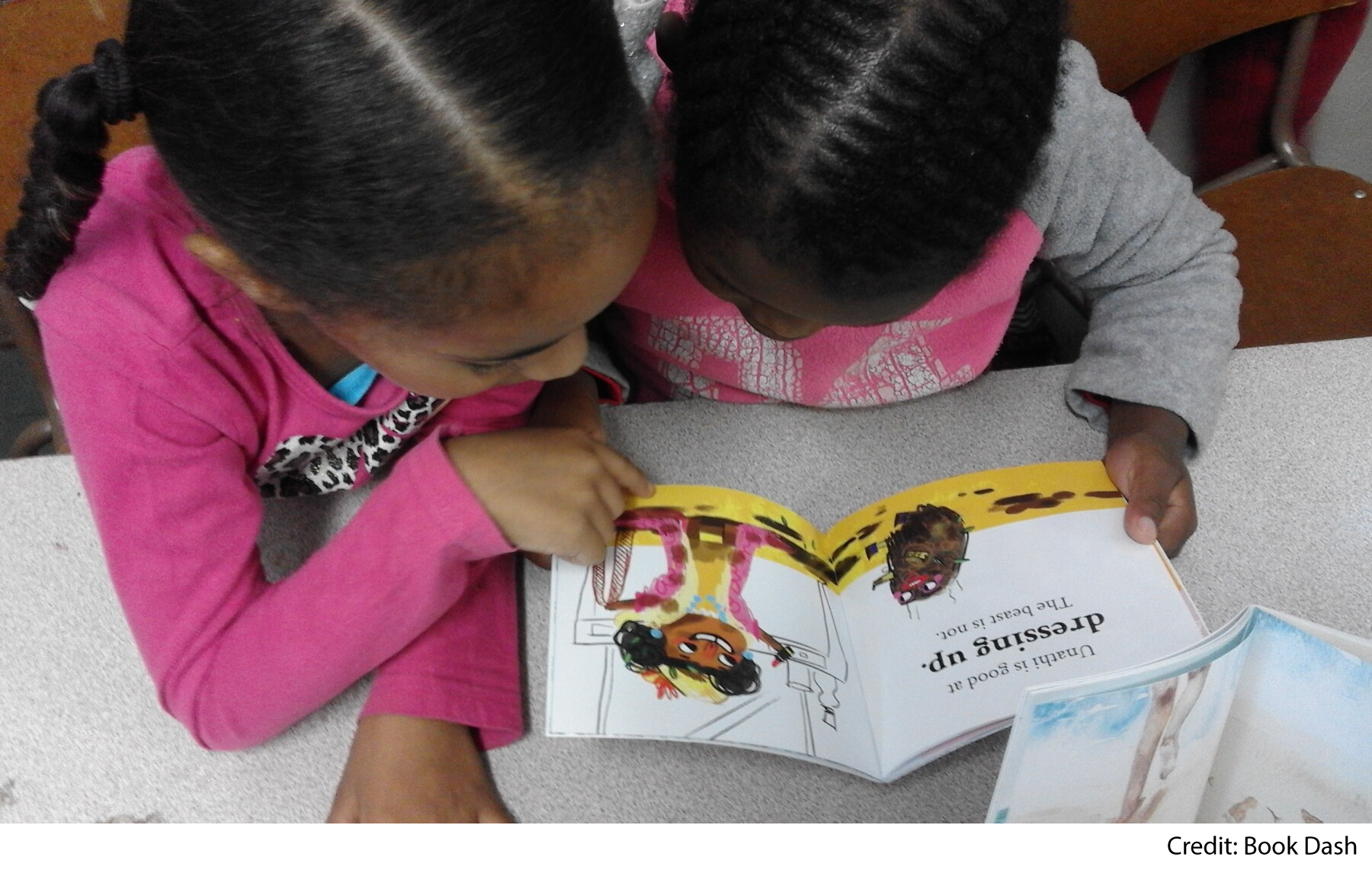
Research by the Norwegian University of Science and Technology has shown that children who have learned to read and write on a device have difficulty distinguishing letters that are similar or that are mirror one another, like letters ‘b’ and ‘d’.
Reading on screens is also less effective way to comprehend, retain and remember information, suggests research by Georgia Gowing at Macquarie University.
One might assume that Millennials and Generation Z would prefer digital over print. In fact, Choles says, the 2021 Academic Reading Format International Study (ARFIS) surveyed 21,265 students across 33 countries and found that the broad majority of students actually preferred to read academic materials in print. Nearly 82% of students said they focus better, and over 70% believed they remember material best in print.
A modern learning environment should be equipped with a blend of both printed material and an array of digital resources. Some countries, like Denmark, are reintroducing hard copy textbooks and rolling back technology in classrooms.
More than words
This year’s International Literacy Day is a reminder that literacy is about far more than reading words on a page. It is the foundation for making sense of our complex world, building essential skills like critical thinking and problem solving so we can contribute meaningfully to society and the economy.
“We are doing humanity a great disservice without access to printed books and reading material,” concludes Choles. “As educational reformer Horace Mann once said, ‘A house without books is like a room without windows.’”