Forests, Communities & the Circular Economy: Insights from COP30 of climate change
COP30 in Belém saw the first-ever theme days on the bioeconomy. As such, there were an impressive number of sessions and side events that focused on how the forestry sector is championing the circular bioeconomy and calling for a nature-positive economic model that will support a climate-resilient future.
Jane Molony, executive director of the Paper Manufacturers Association of South Africa, was invited to speak at several of these events as a representative of both South Africa and the association.
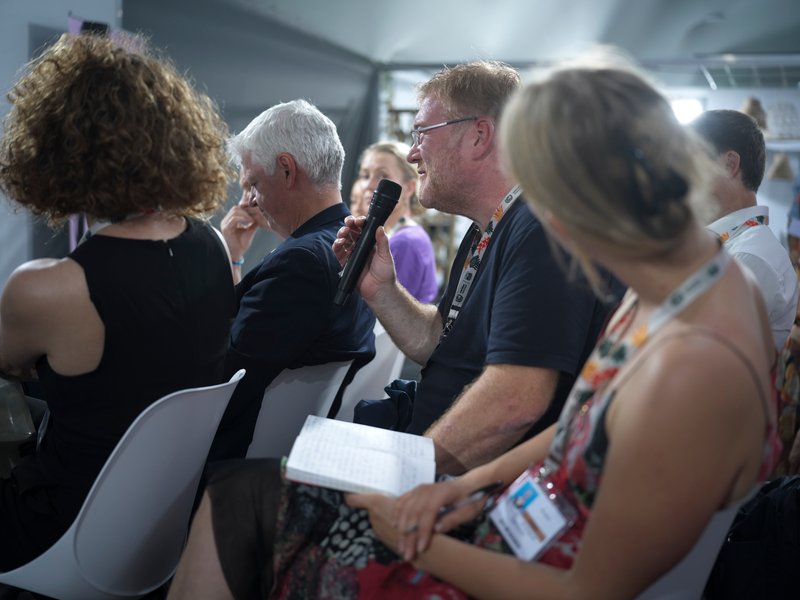
Commenting on the presence of ICFPA colleagues, “It was wonderful to see NZFOA’s Rachel Finlayson, FPAC’s Kate Lindsay and CEPI’s Malgosia Rybak also participating in numerous side events. All four were constantly roped into events where a speaker hadn’t arrived, or joined in fishbowls or ‘huddles’ when there was no microphone and the Amazon thunderstorms were creating a cacophony of noise to accompany the robust debate on how best to implement the circular, biodiverse forest bioeconomy,” shares Jane.
Learning from nature
At the Brazilian–Belgian hosted Pre-COP30 event held on 7 November 2025 in Rio de Janeiro, the forestry sector played a prominent role in shaping discussions on the circular bioeconomy — an emerging global framework that uses renewable, biological resources to produce food, materials, chemicals and energy in a carbon-neutral way.
Speakers highlighted that while the bioeconomy offers enormous potential for climate action and rural development, its success depends on responsible implementation that protects biodiversity and ensures inclusive benefits for local and indigenous communities.
Reporting on South Africa’s involvement in the G20 Bioeconomy Initiative (GIB), Jane emphasised growing global momentum: “There is real appetite for making GIB a permanent platform, something that transcends the various Presidencies of the G20. Today’s bioeconomy is worth $4 trillion, and by 2050 it could reach $30 trillion. That’s not just growth — it’s a fundamental reshaping of how economies work.”
“Nature’s been running a circular bioeconomy for billions of years — zero waste, constant regeneration, everything feeding something else.
“Our challenge isn’t inventing something new — it’s learning from what works, and finally recognising nature’s value on our balance sheets.”
Speakers agreed that the bioeconomy is only sustainable when it is systemic, integrated and inclusive. If implemented poorly, it risks unintended consequences — most notably biodiversity loss or inequitable benefit-sharing. When implemented responsibly, however, it becomes a catalyst for development, positioning local communities as co-creators rather than bystanders in the transition.
Co-creating thriving forest-based bioeconomy approaches
On 10 November, it was the turn of FAO and the Forest Stewardship Council (FSC). This session — Co-creating Thriving Forest-Based Bioeconomy Approaches — examined the importance of renewable forest products, responsible management and inclusive development in shaping resilient, low-carbon economies.
In the session chaired by FAO’s Amy Duchelle, leaders from Brazil, Austria, Japan, South Africa, CIFOR-ICRAF and FSC Brazil explored how the bioeconomy can unlock climate solutions, equity and innovation.
Speakers emphasised that bioeconomy approaches must be people-centred and nature-positive to succeed — benefiting those who live closest to forests and depend on them for their livelihoods.
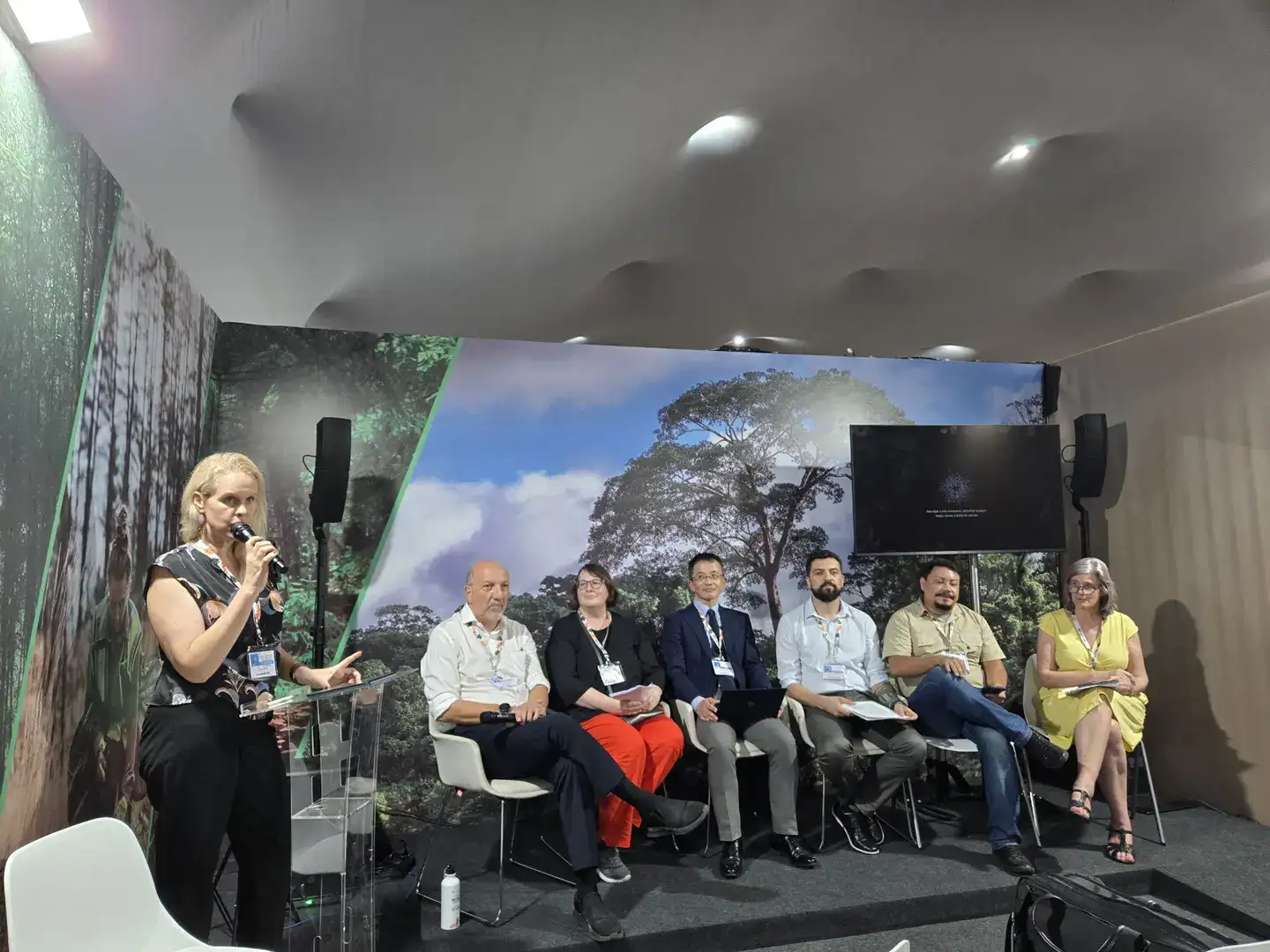
Pictured below, from left, are Garo Batmanian, CEO, Brazilian Forest Service, Elfriede More, Austria’s Federal Ministry of Agriculture, Forestry, Regions and Water Management, Yutaka Kawashima, Forestry Agency of Japan, Elson Fernandes de Lima Fernandes, Director at FSC Brazil, Dr Alison Castilho, Senior Scientist at CIFOR-ICRAF and Jane Molony.


Innovative circular bioeconomy solutions for a sustainable future
On 11 November, the Ministry of Agriculture and Forestry of Finland, together with the World Bioeconomy Association, hosted a session on how circular, bio-based solutions can replace fossil materials and support resilient, inclusive societies. Moderator Jukka Kantola guided a discussion focused on cooperation, innovation and the sustainable use of renewable resources.
Jane Molony, Executive Director of the Paper Manufacturers Association of South Africa, joined panellists Rokiatou Traoré (Herou Alliance) and Claus Felby (Novo Nordisk Foundation) to explore how forest-based industries can accelerate the circular bioeconomy while reducing climate impacts.
Jane highlighted the long-standing role of forests in meeting human needs and driving progress: “Paper, papyrus, fibre, wood — the bioeconomy is billions of years old. It’s the quiet engine behind human progress. But today, the forest bioeconomy is also a climate solution — a circular system rooted in people, prosperity and planet.”
She emphasised that as the climate shifts, the world has a rare opportunity for decadal change driven by adaptation, innovation and circularity — where resources are renewed, biodiversity thrives and economies grow stronger.
Felby concurred: “The bioeconomy is a carbon economy. It’s not new; we’ve had it forever. Then we shifted into a fossil economy, and for a long time we lived in an illusion of abundance. Fossils still play a role, but they’re not the future.
“But we need markets — real markets that can grow, scale and reward progress. We need markets that value biodiversity and ecosystem services. They are the true foundations of a sustainable future.”


Build trust, create value in the forest: principles for community engagement and development
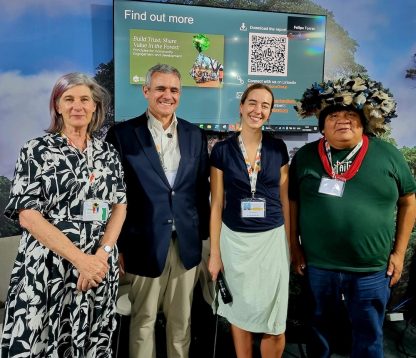
On 17 November, the World Business Council for Sustainable Development, FAO and FSC hosted a focused session on the importance of community engagement as a core driver of sustainable forestry. The discussion centred on practical principles from WBCSD’s Build Trust, Share Value in the Forest report and explored how meaningful partnerships can strengthen both community resilience and business performance.
Jane again shared the stage with Almir Narayamoga Suruí, Chief of the Paiter-Suruí People; Francisco Ruiz-Tagle, CEO of Empresas CMPC; and Edie Marriner, Senior Associate, Forest Solutions Group.
The session underscored that community engagement is a business imperative. Forestry operations coexist with rural and peri-urban communities whose livelihoods are closely tied to the land. In South Africa — where unemployment is particularly high in forestry regions — the sector employs 149,271 people and supports an estimated 597,000 livelihoods.
Speakers highlighted how investment in jobs, skills development, SMEs, recycling enterprises, small-grower programmes, agroforestry, infrastructure and eco-tourism can create lasting, mutually beneficial partnerships.
Jane concludes, “For the forest sector, community engagement is not a defensive strategy — it is the backbone of sustainable business. When we invest in local jobs, skills, small enterprises and environmental stewardship, we are investing in shared prosperity. Thriving communities and thriving companies go hand in hand.”
Thanks must go to the ACSFI and FAO, as well as the Forest Pavilion organisers. We also appreciate the work of Ross Hampton from the International Sustainable Forestry Coalition (ISFC) for providing platforms for ICFPA members to participate.